
How to Plan a Birthday Party for Mixed Ages (Toddlers, Kids and Pre-Teens Together)
Why Mixed-Age Parties Happen More Often Than Planned
Most birthday parties don’t start as mixed-age events.
They become mixed-age events.
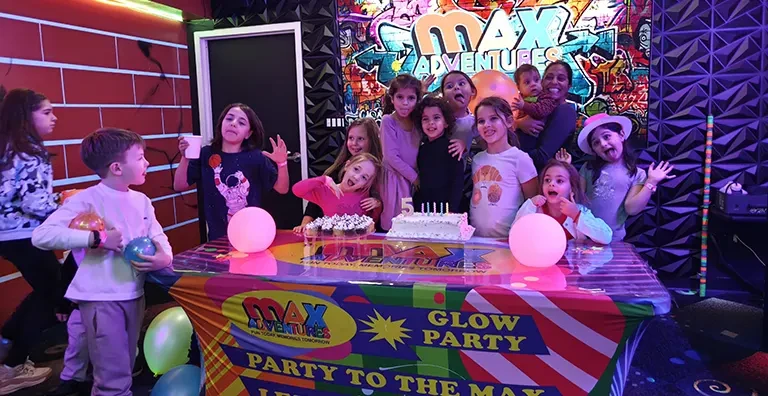
A child invites classmates. Then siblings come along. A cousin joins. Someone’s older brother arrives because the family couldn’t leave him at home. Suddenly the guest list includes a three-year-old, two seven-year-olds, and a group of ten-year-olds all standing in the same room.
For many parents this moment triggers a small panic.
How exactly do you entertain children whose interests sit years apart?
In reality, this situation is extremely common. In neighborhoods like Brooklyn, birthday parties rarely stay within one exact age group. Families attend together, and that naturally blends different ages into the celebration.
Interestingly, the parties that include several age groups are often the ones that feel the most lively. There is more movement, more curiosity, and a wider range of games happening at once.
The trick isn’t trying to make everyone do the same thing.
The trick is making sure everyone has something different to do.
The Real Difficulty Isn’t Age - It’s Pace
Age differences are obvious, but they’re not the main issue during mixed-age parties.
Pace is.
Toddlers experience a party almost like an exploration mission. They move slowly, examining everything. A tunnel becomes fascinating. A ball pit might hold their attention for fifteen minutes.
Pre-teens operate on a completely different rhythm. They look for challenge. Competition. Something that feels a little fast or a little difficult.
Children in the middle roughly six to nine years old float somewhere between these two worlds. They might play cooperatively for a while, then suddenly decide they want a race.
If the party only offers one type of activity, the energy levels collide quickly.
A toddler-friendly indoor playground may feel dull to older kids.
A highly competitive game can overwhelm younger children.
Mixed-age parties succeed when the space allows multiple speeds of play at the same time.
Once that exists, kids begin separating themselves naturally.
The Quiet Trick That Makes Mixed-Age Parties Work
Parents sometimes try to control mixed-age parties very carefully.
They design complicated schedules, assign games to exact time slots, and worry about whether every guest is participating equally.
In practice, that approach usually creates more stress.
Children organize themselves surprisingly well when they have options.
A toddler might wander toward soft play structures. A group of older kids might start competing over arcade scores. Two middle-age kids might invent their own obstacle course challenge.
Nobody assigned these activities.
The environment simply allowed them to happen.
Alex, owner of Max Adventures, sees this pattern constantly.
“Parents worry that kids of different ages won’t mix,” he says. “But kids are actually very good at finding their own level of play.”
That observation appears again and again in mixed-age birthday parties.
Space Matters More Than Themes
Parents often spend hours thinking about themes.
Superheroes. Dinosaurs. Princess castles. Space Adventures.
Themes are fun, but they rarely determine whether a mixed-age party succeeds.
Space matters more.
Specifically, the space needs enough variety so children can spread out instead of crowding around one activity.
Mixed-age environments usually work best when they include different play styles:
- something physical
- something competitive
- something exploratory
For example, one part of the room might include soft climbing structures for younger kids.
Another section might have interactive games where older children compete.
A third area might allow kids to simply move freely, jumping or racing each other.
When these options exist, children distribute themselves naturally.
No one needs instructions.
The “Activity Zoning” Approach
Some venues naturally support what could be called activity zoning.
Instead of one large play area doing the same thing, the space is quietly divided into sections that attract different types of play.
A typical layout might look something like this:
Soft Play Area
This is where younger kids often start. Foam shapes, tunnels, padded climbing blocks—things that invite exploration without pressure.
Movement Zone
Somewhere nearby there may be interactive floor games, obstacle courses, or climbing challenges. This area usually attracts kids around six to nine.
Competitive Zone
Older children gravitate toward games where skill matters. Arcade challenges, laser games, or team competitions tend to pull them in quickly.
The important part is that these zones exist simultaneously.
Kids drift between them.
A seven-year-old might spend ten minutes climbing, then wander over to a competitive game when curiosity strikes.
The room begins to regulate itself.
What Actually Keeps Older Kids Interested
Parents often worry that pre-teens will become bored when younger children attend the party.
In many cases the opposite happens.
Older kids frequently enjoy introducing games or challenges to younger children. They explain rules. They demonstrate tricks. Sometimes they turn simple games into friendly competitions.
That dynamic changes the energy of the party.
Instead of separating the ages completely, it creates moments where the groups interact.
Activities that work especially well for older kids include:
- skill-based arcade games
- obstacle challenges
- team competitions
- reaction-speed games
These activities allow older kids to test themselves while still participating in the larger party environment.
Toddlers at Big Parties: What They Really Need
Toddlers rarely care about structured games.
They care about space.
Soft play environments give them room to climb, crawl, and explore without being overwhelmed by the energy of older children.
The key elements toddlers tend to enjoy include:
- foam climbing blocks
- tunnels
- padded platforms
- ball pits
- simple slides
When younger kids have a comfortable place to explore, they usually remain perfectly happy even when older children are playing nearby.
Parents sometimes underestimate how independent toddlers can be in the right environment.
When Siblings Bring Extra Guests
Mixed-age parties often expand unexpectedly.
A guest arrives with a sibling. Another family brings an older child along. Someone’s cousin appears halfway through the party.
Instead of resisting this, many parents simply embrace it.
Large family-style parties often feel warmer and more relaxed than strictly controlled guest lists.
Different age groups naturally gather around different attractions.
For example:
- younger kids explore soft play areas
- middle-age kids bounce between activities
- older kids cluster around competitive games
No one planned this structure. It happens automatically.
The party becomes less about age groups and more about shared energy.
The Food Question - Easier Than Parents Think
Food is one of the least complicated parts of a mixed-age birthday party.
Despite age differences, children tend to enjoy very similar party menus.
Common favorites include:
- pizza
- fruit or simple snacks
- juice or soft drinks
- birthday cake
The key detail is timing.
Serving food roughly halfway through the party works well because it creates a natural pause in the action. Younger children appreciate the break, and older kids often regroup before jumping back into activities.
That moment also provides the perfect time for the birthday song and cake.
How Indoor Play Venues Simplify Mixed-Age Parties
Indoor play venues often solve mixed-age challenges without parents realizing it.
Many are designed with multiple attractions already in place.
For example, a single venue may include:
- soft play areas
- interactive floor games
- climbing structures
- arcade challenges
Different children gravitate toward different areas.
Parents don’t have to organize separate entertainment for each age group.
Alex says this happens regularly at Max Adventures.
“We see parties where toddlers, eight-year-olds, and twelve-year-olds are all in the same room,” he explains. “They simply find different activities.”
The environment does the work.
A Few Practical Planning Tips
Mixed-age birthday parties become easier when parents focus on a few practical ideas.
Choose a venue with variety
The more activity options available, the easier it is for kids to spread out.
Avoid overly strict schedules
Children prefer freedom to explore different activities.
Expect groups to form naturally
Kids organize themselves faster than adults think.
Let older kids take the lead sometimes
They often enjoy helping younger children play games.
Trust the environment
Once the space supports different types of play, the party usually runs itself.
Final Thoughts
Mixed-age birthday parties sound complicated when described in advance.
In reality they often turn into some of the most energetic celebrations.
Younger children explore. Middle-aged kids bounce between activities. Older kids introduce challenges and friendly competition.
Instead of forcing everyone into the same activity, the party becomes a collection of small moments happening all over the room.
Parents stop worrying.
Kids start playing.
And somewhere in the middle of the laughter and movement, the birthday celebration unfolds exactly the way it should.
FAQs
Can toddlers and older kids enjoy the same birthday party?
Yes. When the environment includes different types of activities, children naturally choose what feels comfortable for their age and energy level.
What activities work best for mixed-age birthday parties?
A combination of soft play areas, movement games, and competitive challenges allows different age groups to participate at their own level.
Do older kids get bored at mixed-age parties?
Usually not. Older children often enjoy competitive games or helping younger kids learn new activities.
How long should a mixed-age birthday party last?
Most indoor birthday parties last about two hours, which gives kids enough time to explore several activities without becoming tired.
Do parents need separate entertainment for each age group?
Not necessarily. Venues that offer a variety of activities usually allow children to self-select what they enjoy most.
Is a family birthday party with different ages difficult to organize?
With the right venue and a flexible approach, mixed-age parties are often easier to manage than parents expect.