
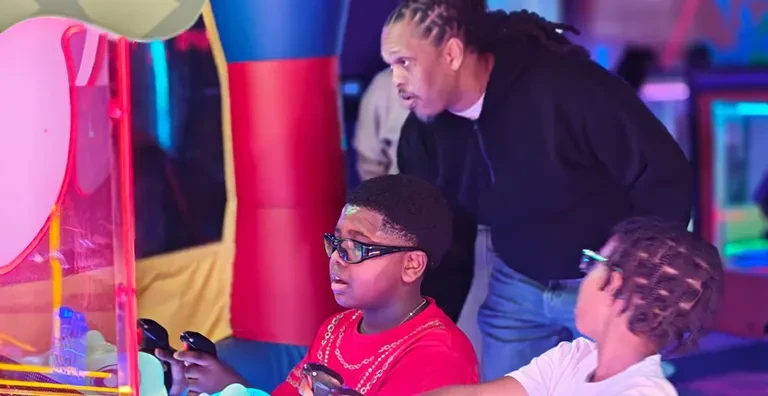
Best Indoor Birthday Party Ideas for 9–13 Year Olds in Brooklyn
Tween-Friendly Experiences That Kids Actually Love
Kids between 9 and 13 want independence, social energy, and activities that feel age-appropriate. The most successful indoor birthday parties in Brooklyn for this group are interactive, competitive, and structured around peer engagement. Private indoor venues can feel exciting and socially “cool” when they offer challenge-based activities, tech-driven experiences, and space for kids to gather without adult interruption.
Table of Contents
1. What Changes Between 9 and 13
2. Why “Not Baby Stuff” Matters
3. What Tweens Actually Enjoy
4. Competitive Indoor Activities That Work
5. Designing the Right Social Flow
6. Keeping It Cool Indoors in Brooklyn
7. Sample 2-Hour Party Structure
8. Real Planning Example from Brooklyn Families
9. Parent Checklist
10. Frequently Asked Questions
What Changes Between 9 and 13
Between ages 9 and 13, children enter early adolescence. According to the American Academy of Pediatrics, this period includes rapid cognitive growth, increasing need for peer approval, and stronger identity formation.
Dr. Marcus Rivera, a Brooklyn-based child psychologist with 16 years of experience working with middle-school students, explains:
“By age nine, the social group becomes central. Birthday parties shift from family-focused celebrations to peer-centered social events.”
Key developmental shifts:
- Increased sensitivity to peer perception
- Desire for independence from parents
- Preference for challenge and skill-based activities
- Lower tolerance for activities perceived as childish
A party that feels appropriate at age six will not resonate at age eleven.
Why “Not Baby Stuff” Matters
At this stage, perception drives enjoyment. Kids want activities that feel:
- Competitive
- Tech-forward
- Physically engaging
- Socially interactive
They are quick to label something as “for little kids.” Once that label sticks, engagement drops.
Research from the National Institute of Mental Health shows that early adolescents experience heightened social awareness. Environments that allow autonomy and group collaboration increase participation and satisfaction.
Source: National Institute of Mental Health, Adolescent Brain Development Overview
What Tweens Actually Enjoy
Based on trends observed across Brooklyn party venues and over a decade of structured indoor events, the following categories consistently perform well:
Activity Preferences by Age
| Age Range | High-Engagement Activities |
|---|---|
| 9-10 | Obstacle challenges, glow games, team competitions |
| 11-12 | Laser maze, interactive tech games, arcade tournaments |
| 12-13 | VR experiences, head-to-head competitions, timed challenges |
What works is not decoration. What works is participation.
Competitive Indoor Activities That Work
1. Team-Based Challenges
Dividing guests into small teams increases engagement. It creates shared goals and light competition.
Examples:
- Timed obstacle runs
- Score-based arcade challenges
- Strategy-based game rotations
2. Interactive Technology
Virtual reality and immersive games appeal strongly to this age group. They offer novelty and skill-building at the same time.
At Max Adventures in Brooklyn, staff report that VR stations and Laser Maze experiences consistently attract older birthday groups. Over the past several years, tween bookings have increasingly requested competitive formats rather than open play.
3. Glow or Themed Competitive Zones
Lighting shifts and structured challenges add atmosphere without feeling juvenile. Tweens respond well to environments that resemble entertainment venues rather than playgrounds.
Designing the Right Social Flow
At ages 9–13, social clustering naturally happens. A good party layout allows:
- Space to gather in small groups
- Areas for competitive action
- A separate lounge area for food and conversation
Independence matters. However, discreet supervision remains essential.
Event coordinators with more than 10 years of experience managing youth parties in Brooklyn note that tweens engage more confidently when adults are present but not intrusive.
Keeping It Cool Indoors in Brooklyn
Parents often assume outdoor parties feel more mature. In Brooklyn, that is not always practical. Weather variability, shared park spaces, and limited privacy reduce control.
Indoor private venues offer:
- Full event control
- Structured competition
- Controlled guest access
- No weather disruption
The key difference is atmosphere. Older kids respond better when the environment feels like an entertainment venue rather than a children’s gym.
Sample 2-Hour Party Structure for Tweens
| Time | Activity |
|---|---|
| 0-15 min | Arrival and open social time |
| 15-45 min | Team competition rotation |
| 45-70 min | Head-to-head challenge |
| 70-90 min | Food and social break |
| 90-110 min | Tournament final round |
| 110-120 min | Awards and wrap-up |
Structured pacing keeps energy high without losing focus.
Real Planning Example from Brooklyn Families
A Williamsburg family planned an 11-year-old’s party with 14 classmates. The child specifically requested “nothing baby.”
Initial idea: bowling and cake at home.
Final decision: structured indoor competitive venue.
- Created team names
- Introduced timed scoreboard
- Reduced decoration focus
- Kept adult presence minimal
Feedback from parents indicated higher engagement and fewer social awkward moments. The competitive format gave quieter kids defined roles within teams.
The lesson was clear. Structure supports social confidence.
Parent Checklist Before Booking
- Confirm private event space
- Ask about competitive formats
- Clarify staff supervision policy
- Ensure activities match age group
- Plan simple food options
- Limit party length to two hours
Frequently Asked Questions
How many guests is appropriate for ages 9–13?
10–15 is manageable for competitive indoor formats.
Do tweens still enjoy birthday parties?
Yes, when activities feel mature and peer-focused.
Are indoor venues too childish?
Not when the activities include competition, technology, and independence-driven formats.
How much adult supervision is necessary?
Supervision should be present but subtle. Staff-led coordination works well.
Final Thoughts
Tweens want challenge, autonomy, and social energy. The most successful indoor birthday parties in Brooklyn focus on competition, collaboration, and interactive experiences that reflect growing independence.
If you are planning a birthday party for a 9–13 year old in Brooklyn and want an indoor space that feels engaging rather than juvenile, explore structured party options at Max Adventures.
For additional planning guidance, visit the Max Adventures blog or contact the team to discuss age-specific packages.
Have questions about tween party planning? Reach out and start building a format that kids will genuinely enjoy.